Over the past 80 years, these instructions on how to sabotage have become standard practice in many organisations, though not for the purpose for which they were written.
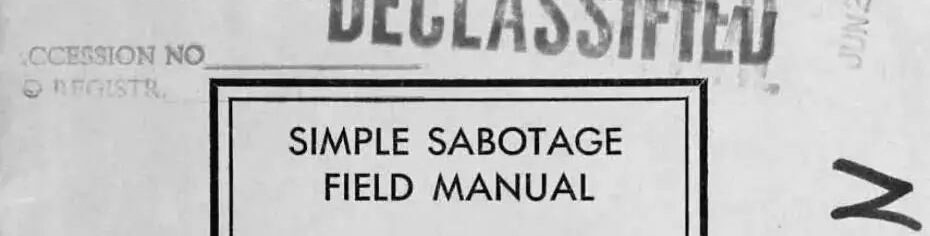
The CIA distributed a pamphlet among resistance fighters and civilians in occupied territories via soldiers: the ‘Simple Sabotage Field Manual’. In 32 pages, the CIA described how to weaken an occupying force by applying productivity sabotage in the workplace. The document begins with an explanation of sabotage and its usefulness, before moving on to recognisable examples, such as deliberately making toilet paper disappear. This is quickly followed by concrete actions intended to frustrate and slow down processes.
It is both shocking and amusing. What was once written as deliberate sabotage has, over the past 80 years, become everyday behaviour in many organisations — just not with that original intention.
Productivity sabotage in the workplace
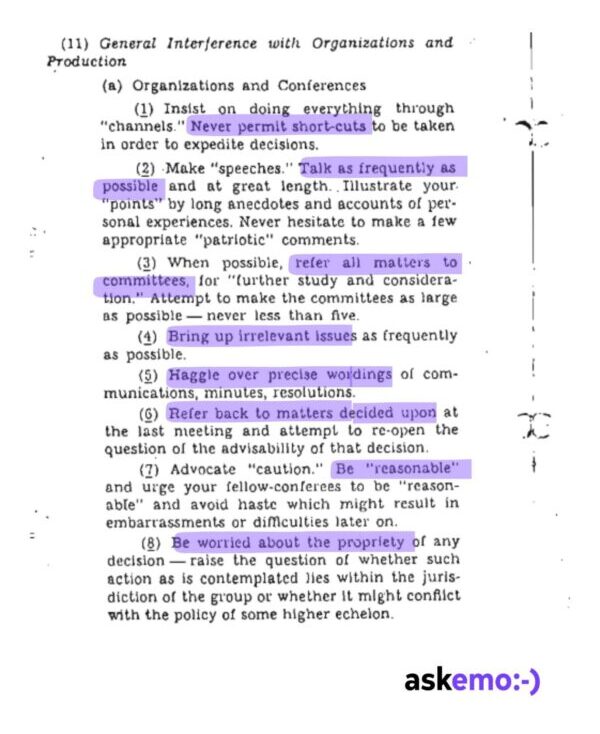
In the document, the CIA distinguishes between general instructions, guidelines for managers and instructions for employees. If you recognise yourself or others in the examples that follow, you are certainly not alone. That is precisely why it is important to recognise these forms of productivity sabotage in the workplace, to make them a topic of discussion and to consciously strive for change.
Read on…
How many of these points do you recognise within your organisation?
With askemo, you can set up a scientifically validated MTO that’s user-friendly for you and your colleagues. No long, tedious surveys. Just short questionnaires with the highest response rate in the Netherlands. Staff can reply quickly and easily, much like sending a ‘Tikkie’.
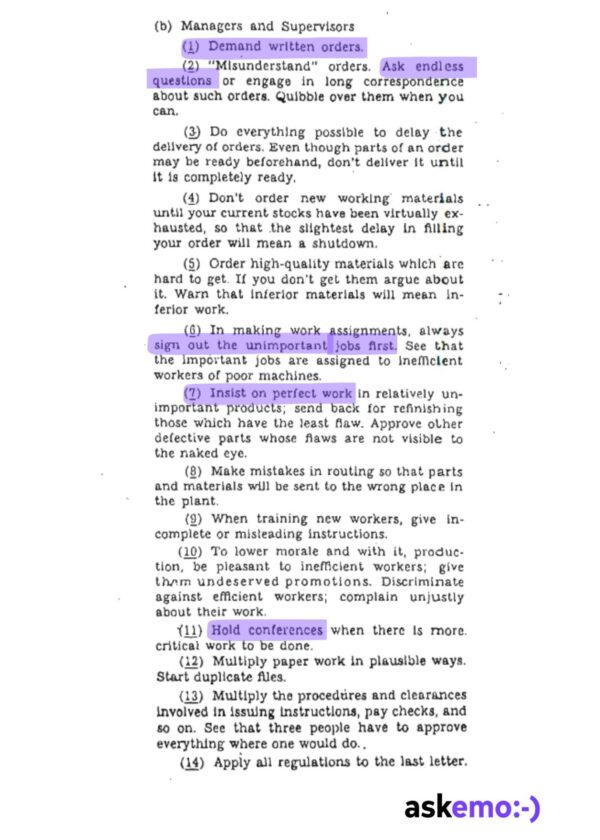
The manual lists 14 points; below are my top 6 ways in which a manager can undermine sound business operations:
Do you recognise the points above in managers you’ve worked for? Or perhaps even in yourself…?
Once again, the question: does the above sound familiar?
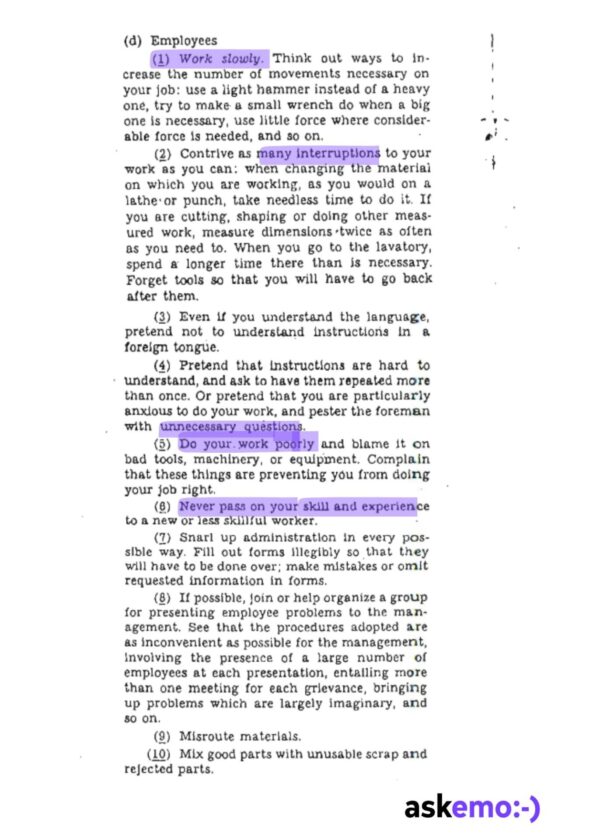
In all honesty, I saw the points above on a daily basis when I was still working for a corporation. In managers, in colleagues and, yes, in myself too. It was woven into the corporate culture and the norms.
As the owner of askemo, I hope to steer clear of these issues for as long as possible. I do this by granting freedom and asking for responsibility in return.
And by stepping in if I do see it happening. That doesn’t have to be unpleasant; constructive intervention based on consultation and consensus is also possible!
Does the latter not help?
Then I suggest they send a job application to the CIA… 😉
PS. My final tip…
Do you recognise one or more of the points above? Share this blog with colleagues ahead of your next consultation or meeting and use it as inspiration to bring about change.
Roel Schellekens
Founder of askemo